Production ML Systems Are Decaying in Silence: The Case for Treating Model Pipelines as First-Class Technical Debt

Photo: Ecole polytechnique / Jérémy Barande, CC BY-SA 2.0, via Wikimedia Commons
The machine learning model your team deployed eight months ago is not the same model your users are interacting with today. Not because it has been updated—but precisely because it has not. The world it was trained to interpret has shifted. The data it consumes has drifted. The dependencies it relies on have versioned forward. And in most production ML environments, none of these changes have triggered a single alert.
This is the defining characteristic of ML system decay: it is gradual, it is largely invisible to conventional monitoring tooling, and it accumulates at a rate that software engineers—even experienced ones—consistently underestimate.
The Debt Accumulation Rate Problem
Technical debt in traditional software systems is reasonably well understood. Code becomes harder to modify, test coverage erodes, architectural decisions made under time pressure constrain future development. The mechanisms are familiar, and the industry has developed reasonable heuristics for measuring and managing the accumulation.
Machine learning systems inherit all of these problems and introduce several that are categorically distinct. Conversations with ML platform engineers at organizations ranging from mid-scale startups to enterprise data teams reveal a consistent observation: production ML pipelines accumulate operational debt at a rate that practitioners estimate at three to five times that of equivalent traditional software systems, when measured against the same deployment timeline.
The reasons are structural, not incidental.
Data Drift: The Debt You Cannot See in Your Code Review
A conventional software system, once deployed, executes deterministically against defined inputs. Its behavior changes only when its code changes. A machine learning model, by contrast, is a function of its training data—and the relationship between that training data and the real-world distribution it was designed to represent is not static.
Data drift occurs when the statistical properties of production inputs diverge from the training distribution. This can manifest as covariate shift, where input feature distributions change while the underlying relationship between features and targets remains stable, or as concept drift, where the relationship itself changes. The latter is particularly insidious because it can occur without any change to input data volumes or surface-level statistics.
Consider a credit risk model trained on lending behavior patterns from 2021 through early 2022. Interest rate environments, employment patterns, and consumer debt behavior shifted substantially over the following eighteen months. A model that was accurate within acceptable bounds at deployment may be producing materially degraded predictions two years later—not because of any engineering failure, but because the world it was trained to model has changed.
In the absence of explicit drift monitoring, this degradation is invisible until it surfaces as a business outcome: increased default rates, customer complaints, or a performance audit that reveals accuracy metrics well below deployment benchmarks.
Retraining Cadence: The Gap Between Theory and Practice
The theoretical solution to data drift is straightforward: retrain models on recent data at a cadence calibrated to the rate of distribution shift in the relevant domain. In practice, retraining pipelines are among the most fragile components in the ML infrastructure stack.
ML platform engineers consistently describe retraining as a process that is automated in principle and manual in practice. Data pipelines fail silently. Feature engineering code written against a specific schema version breaks when upstream data teams modify table structures. Hyperparameter configurations that were optimal at initial training may not generalize to retraining on a rolling window. Validation logic that was sufficient for the initial model may not catch regressions introduced by retraining on data from a different time period.
The result is that many organizations have nominal retraining pipelines that are not actually executing reliably—and no monitoring instrumentation capable of detecting when a scheduled retraining job has failed, produced an invalid model, or silently rolled back to a stale artifact.
One ML infrastructure team at a large US-based e-commerce organization estimated that approximately 30% of their production models were running on artifacts that were at least one retraining cycle behind schedule at any given time. The gap was not visible in their deployment tooling because the deployment infrastructure had no concept of model freshness.
Dependency Hell at the ML Layer
Traditional software dependency management is a solved problem in the sense that the industry has mature tooling—package managers, lockfiles, virtual environments, container images—that makes dependency state reproducible and auditable. ML systems operate within this same ecosystem but add a layer of complexity that these tools were not designed to address.
A production ML model is a function of its training code, its training data, its feature engineering logic, its model architecture, its hyperparameters, and the specific versions of the numerical libraries—NumPy, scikit-learn, PyTorch, TensorFlow—present at training time. Minor version updates to numerical computation libraries can produce non-trivial changes in floating-point behavior that alter model outputs in ways that are detectable only through careful validation against held-out test sets.
Few organizations have implemented the model lineage tracking infrastructure required to audit these dependencies comprehensively. Fewer still have established policies that trigger revalidation when upstream library versions change. The consequence is that production models are routinely running against dependency environments that differ from the environments in which they were trained and validated—and the magnitude of the resulting behavioral change is unknown.
Monitoring Blind Spots: What Standard Observability Tooling Misses
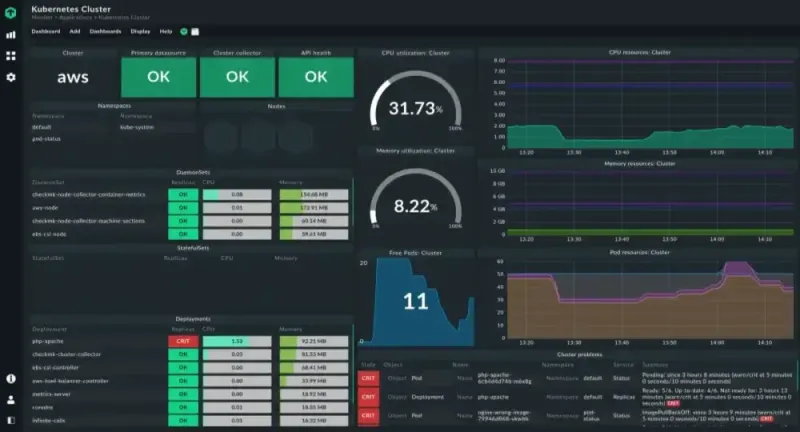
Conventional application monitoring tools are designed to surface infrastructure-level signals: latency, error rates, throughput, resource utilization. These metrics are necessary for ML systems but not sufficient. A model inference service can exhibit perfectly healthy infrastructure metrics while producing predictions that are systematically biased, increasingly inaccurate, or distributing outputs across a range that no longer reflects the target variable's true distribution.
The observability gap is not a tooling failure in isolation—it reflects a conceptual gap in how engineering organizations have historically thought about production monitoring. Application monitoring assumes that a healthy service is one that executes its logic correctly. For ML systems, correct execution of degraded logic is the failure mode.
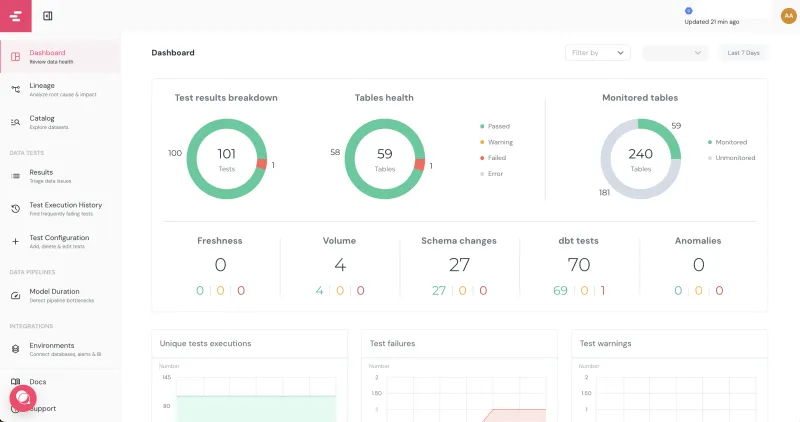
Emerging ML observability standards, including frameworks proposed by working groups within the MLOps community and tooling from vendors including Arize, Evidently, and WhyLabs, are beginning to address this gap. These platforms instrument prediction distributions, monitor feature importance stability, and flag drift against configurable statistical thresholds. Adoption among US enterprise teams is accelerating, though implementation maturity varies substantially.
A Standards-Based Approach to ML Debt Measurement
Organizations seeking to quantify ML system debt require metrics that capture dimensions invisible to traditional software debt measurement tools. A practical measurement framework should address four dimensions:
Model Freshness Index: The elapsed time since last validated retraining, normalized against the domain-specific drift velocity. A model in a high-velocity domain—fraud detection, real-time bidding—has a materially shorter acceptable freshness window than a model in a slow-moving domain.
Prediction Distribution Stability Score: A statistical measure of how closely the current production prediction distribution matches the distribution observed at deployment validation. Significant divergence is a leading indicator of drift-induced degradation.
Dependency Audit Coverage: The percentage of the model's dependency surface—training code, feature engineering logic, library versions—that is captured in reproducible lineage artifacts. Low coverage indicates elevated risk from undocumented environmental change.
Retraining Pipeline Reliability Rate: The percentage of scheduled retraining jobs that complete successfully and produce models that pass validation gates, measured over a rolling 90-day window.
Conclusion
The argument that ML systems accumulate technical debt faster than traditional software is not an argument for pessimism about machine learning in production. It is an argument for proportional investment in the operational infrastructure required to sustain production ML systems at the standard that their business criticality demands.
Organizations that treat model deployment as the end of the engineering lifecycle—rather than the beginning of an ongoing operational commitment—are not running ML systems. They are running ML systems that are slowly becoming something else, and they will not know what that something else is until it has already caused harm.
The tooling to address this exists. The standards to guide implementation are maturing. What remains, for most US engineering organizations, is the organizational will to treat ML pipelines with the same rigor applied to the rest of the production stack.